Showing posts with label NUTRITION. Show all posts

Wednesday, October 17, 2012

THERAPEUTIC LIFESTYLE CHANGES TO LOWER CHOLESTEROL


THERAPEUTIC LIFESTYLE CHANGES TO LOWER CHOLESTEROL
Compiled by 
 Dr.Saroja Raghavan H.O.D & Senior Manager N&D
 K.Saranya –Executive N&D

If you have high cholesterol and have heart disease or other risk factors for heart disease, Therapeutic Lifestyle Changes (TLC) diet is recommended.


DIETARY TIPS TO LOWER CHOLESTEROL


  • Reduce sodium intake to 2400mg per day.
  • Limit saturated fats less than 7% of your daily calorie intake
  • Eat only enough calories each day to achieve or maintain a healthy weight.
  • Choose foods rich in complex carbohydrates such a whole grains, vegetables and fruits.


  • Prefer low or non –fat dairy products like skimmed milk, skimmed curd, low fat cheese, butter milk rather than whole milk, butter and full fat cheese.
  • Eat moderate amount of lean meat like chicken without skin and fish. Also avoid fatty cuts of meat.


EXERCISE TO LOWER CHOLESTEROL


Regular exercise will help to


  • Lower triglycerides and LDL (bad) choleseterol level
  • Raise your HDL (good) cholesterol level
  • Reduce blood pressure
  • Shed extra weight
  • Improve the functioning of heart and lungs

Start with simple exercises like walking and taking the staircase in your office .If you want to do it more aggressively do brisk walking and cycling. Schedule your exercise program for at least 30 minutes a day.

Change in eating habits and exercise help to reduce your cholesterol level


Tuesday, October 9, 2012

KNOW THE HIDDEN BENEFITS OF SPICES


       KNOW THE HIDDEN BENEFITS OF SPICES
                                            
                                                  Compiled by
                                         Lizy Bonsal, Dietitian
Dr Mohan's Diabetes Specialities Centre  


Garlic:  Thiosulfinates (allicin) found in garlic can bring about significant reduction in total cholesterol and in blood pressure; help prevent coronary artery disease and stroke.

Rosemary:  It is a herb which is a rich source of minerals like potassium, calcium, iron, manganese, copper, and magnesium. Potassium is an important component of cell and body fluids, which helps control heart rate and blood pressure. Rosemary also contains very good amounts of vitamin A. Vitamin A is known to have antioxidant properties and is essential for vision. Consumption of natural foods rich in vitamin A is known to help  protect the body  from lung and oral cavity cancers. 

Ginger: It reduces nausea induced by motion sickness or pregnancy and may help relieve migraine headaches.

Celery: It has been used in complementary medicines to reduce blood pressure, to relieve indigestion and as an anti-inflammatory agent. It  is also used as a diuretic to remove excess water from the body.


FenugreekIt lowers blood LDL-cholesterol levels by inhibiting bile salt re-absorption in the colon. Fiber, trigonelline present in the seeds helps lower rate of glucose absorption in the intestines and  thus controls blood sugar levels. The seeds are therefore recommended in diabetic diet. Fenugreek seeds are added to cereals and wheat flour (bread) or made in gruel and given to nursing mothers to increase milk production.

Pepper: It has been used therapeutically in dentistry as an antiseptic for tooth-decay and gum swellings.

Coriander seed: It helps to increase bulk of the food by absorbing water throughout the digestive system and helps ease constipation. In addition, dietary fiber  binds  to bile salts (produced from cholesterol) and decreases their re-absorption in the  colon, thus helping to lower serum LDL cholesterol levels. Together with flavonoid anti-oxidants, fiber composition of coriander helps protect the colon mucus membrane from cancers.

Sesame seed: The mineral zinc in sesame seed, promotes healthy bones. Sesame also contains copper which helps in relief of rheumatoid arthritis. Calcium in sesame, helps in the prevention of many health problems, like migraine, PMS (Premenstrual syndrome), Osteoporosis and colon cancer . Magnesium content in sesame, helps to maintain respiratory and vascular health. Sesame seeds are also anti –oxidant and anti depressant. They are also used to treat constipation.

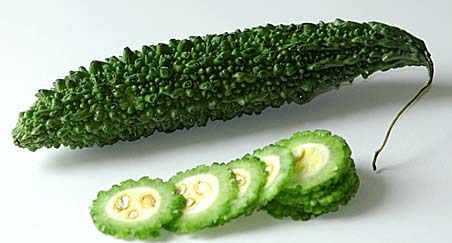
Better Learn About Bittergourd (Bitter Melon)


              Better learn about bittergourd(bitter melon)

Compiled by 
Lizy Bonsal, Dietitian
Dr Mohan's Diabetes Specialities Centre

  • Fresh bitter melon is an excellent source of vitamin-C. Vitamin-C, one of the powerful natural antioxidants, helps body scavenge deleterious free radicals- one of the reasons for cancer development.            
  • Very low in calories; provides only 17 cal per   100g. The pods are rich in phytonutrients like dietary fiber, minerals, vitamins and anti-oxidants. 
  • Bitter melon contains phyto-nutrient, polypeptide-P; a plant “insulin” known to lower blood sugar levels. In addition it also contains a hypoglycemic agent called charantin. Charantin increases glucose uptake and glycogen synthesis in the cells of liver, muscle and adipose tissue. Together, these compounds can cause reduction of blood sugar levels in type-2 diabetes.
  • Fresh pods are an excellent source of folate; contains about 72 mcg/100g.  Folate helps to reduce the incidence of neural tube defects in offspring when taken by pregnant women during early pregnancy.
  • It is an excellent source of health promoting flavonoids such as beta-carotene, alpha-carotene, lutein, and zeaxanthins.   
  •  It also contains good amount of vitamin A. Together, these compounds help act as protective scavengers against oxygen-derived free radicals and reactive oxygen species (ROS) that play a role in aging, cancers and various disease processes.
  • Bitter melon stimulates easy digestion and peristalsis of food through the bowel until it is excreted from the body. Thus, it helps in relieving indigestion and constipation.
  • The vegetable is also a good source of Niacin (vitamin B-3), Pantothenic acid (vit.B-5), Pyridoxine (vit.B-6) and minerals such as iron, zinc, potassium, manganese and magnesium.